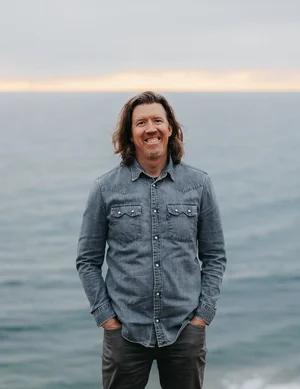
Steve Biddulph: The Deep Work of Adult Friendship
What does it mean to be fully human - and how do friendship and connection shape the lives we live?
In this conversation with psychologist and bestselling author Steve Biddulph, we explore the deep work of adult friendship, listening and what it takes to stay open-hearted in a hurried world. Steve reflects on his own journey into connection, sharing how our brains shape relationships, why we fundamentally need one another and how slowing down creates real presence and care.
Drawing on decades of clinical work, Steve introduces his simple four-storey model of body, emotions, mind and spirit, offering a grounded way to understand wellbeing and belonging. Together, we explore men’s loneliness, the courage to ask for help, and why receptivity - not self-sufficiency - is at the heart of meaningful relationships.
Set against the wider pressures of cultural challenges and the rise of AI, this conversation is a gentle reminder that friendship, silence and human connection remain essential to a life well lived.
Steve is the author of Raising Boys, Raising Girls and Fully Human. You can find out more about his work at www.stevebiddulph.com.
NOTE: If you enjoyed this episode, I would be so grateful if you could rate the show and leave me a review on Apple podcasts. These reviews help more people discover the show. You could mention what you like about the show - the episode that made you a regular listener - or your favorite guest or episode. Here’s some easy instructions on how to leave a review.
Thank you so much!
-
Jono (00:02.48)
Well, welcome to those who are joining us live for today's podcast recording. I just want to let you know that before we begin, just a few notes that today, Steve's conversation will run for about 60 to 90 minutes. And we've allowed a little bit of time at the end for audience Q &A. And we've received some questions ahead of time. But if you wanted to add any more, you can just put those in the chat box.
during the session and then we'll get to those at the end of the recording. And I also want to let you know that occasionally the video might appear blurry. That's just a live stream quality issue, it doesn't affect the recording. But if it's distracting, just feel free to switch the video off and just listen to the conversation that is an option. But before we begin, we always like to begin just with some meditation, just to settle in and ground together.
So if you're okay doing that, you may just want to get comfortable in your chair. And...
And gently close your eyes if you're comfortable with that.
Jono (01:15.746)
and gently arrive here today.
in this moment.
Jono (01:24.868)
and to help you arrive this afternoon. You may want to take some deep breaths into your belly.
and on the out-breath to really let go of any tensions or worries or anxieties you may have.
in your own time.
Jono (02:11.651)
And just notice how good it feels to let go and to come into this moment.
Jono (02:22.043)
and then bringing your attention to your feet on the ground.
Jono (02:28.645)
Just noticing the natural pull of gravity keeping you close to the earth.
Some would say this is Mother Earth's way of keeping you close and letting you know that you belong here at this time in this place.
Jono (02:52.165)
then bringing your attention up your legs, your calves and your thighs. Noticing any sensations? Or none? That's okay.
Jono (03:10.309)
Then bringing your attention up to your waist and to your belly. And perhaps when you get to your belly, you may want to put your hand on your belly and just notice the natural rise and fall.
of your belly.
Jono (03:26.799)
this breath that has been with you since you were born.
Jono (03:39.931)
and just notice the pace in which life wants you to live.
Jono (03:53.019)
and then gently bringing your hand back down to your lap and bringing your attention up to your chest area.
Jono (04:05.723)
perhaps even to your heart region.
Jono (04:11.767)
And just imagine noticing your chest and your front body being open and soft.
kind of being ready to receive, ready to.
here.
Jono (04:30.435)
And at the same time as you're holding this awareness in your heart, you may want to bring your attention to your back body, to your spine.
sitting up a little bit more uprightly, perhaps bringing your shoulders down a little bit.
Jono (04:48.965)
And then imagine simultaneously the strength of your back body and the openness and the softness of your front body.
Jono (05:04.507)
this ability to be able to receive and share openly from your front and knowing that your back body is strong and able to hold you.
Jono (05:22.703)
and then bringing your attention again to your heart. You may want to have a wish or a prayer or an intention for our time together.
What is it that you would hope for our time together today with Steve?
as we discuss this.
theme of friendship together.
Jono (05:51.161)
You may even have a wish or a prayer for Steve today.
Jono (06:07.515)
And then before you open your eyes and come back into the room, I'd invite you to take those three deep breaths again into your belly. And this time to really let go of any tension or any worries you may have.
even making any sounds if that helps on the exhale.
Jono (06:46.299)
And then when you're ready to gently open your eyes and come back into the room, into the circle.
Jono (07:07.481)
Well, Steve, I'd like to welcome you here. It's so, so lovely to see you after all these years.
Steve Biddulph (07:14.52)
Hi Jono and hello to everyone who either watches or listens. This is to you and thanks so much for being interested to hang out. I hope I can be of service to you and have a bit of fun as well.
Jono (07:34.651)
Steve, I was wondering to help our listeners kind of settle in. was wondering whether, and just in the form of a check-in, maybe you, would you mind sharing where you are right now, even geographically and emotionally?
Steve Biddulph (07:47.289)
Yeah, okay, well, I'm in Litterimirina country, which is the Tamar Valley of Tasmania, and it's a lustrous and changeable day. You can see out by window here. And I...
been wanting to go kayaking for a couple of weeks and it's been too windy. Where I'm at personally is I settled really nicely when you did the meditation with us, Jono, it was lovely. But I'm also very tired and wanting to let people know that I'm in this sort of...
if I'm a little bit wobbly or hesitant for words, don't panic. That's how it is.
But imagine perhaps if we're sitting around a campfire late at night, sometimes those tired times are the best times. yeah, but pretty happy and excited to be talking. It's good topic. It's a topic that really lights me up to talk about. So let's get started. I'm happy to do that.
Jono (09:01.423)
Hmm. Yeah. Well, Steve, just for context for our listeners, I think most people probably know you from your books. You know, you're raising boys, raising girls. And I know that your last two books, you know, Fully Human and The Wild Creature Mind have explored kind of the inner world of humans and our potential as humans. And maybe it's just a context. What has kind of motivated this kind of evolution in your work, if it could be called that?
Steve Biddulph (09:31.231)
Yeah, well, on the outside we get older, but on the inside we kind of start to get deeper and closer to something. And so particularly Wild Creature Mind is the simplest book I've ever written. And it's just this one single idea.
which isn't, it's not my idea. It comes from the neuroscience of Ian McGilchrist, a British neuroscientist, and some other people who kind of gave that legs a bit more in the practical world. so, but it's the thing that is so exciting to me now, that it's like it puts everything else in the shade.
I'm always happy to talk about raising boys and making better men and that's certainly, you know, a big thing and I'm concerned about the world of girls and women too. But where I'm at is the astonishing implications of the fact that we've got two brain hemispheres and what McGillchrist is teaching about that we have two different ways of being in the world and they're supposed to work as a team and
that our whole civilization forgot that and I didn't know that. so life has never been more exciting than it is now. And that's both sides of the excitement because we're in enormous danger as a species. And what McGillchrist is saying, what I'm thinking of, choosing what to write about, you write about the things you think the human race needs most.
The human race definitely needed help with raising a better kind of masculinity in the 90s when I started. But now it's down to the wire. And so we have to equip ourselves to be exactly what you said in your meditation, have open hearts and strong, strong, strong backs and walk into the fire. so...
Steve Biddulph (11:47.811)
These are very, you know, we'll have a very gentle talk today. These are very gentle topics, but don't be mistaken about that, you know, this is taking on a world of incredible badness and lostness. then there's, there's, have to.
get these tools and use the incredible strength of heart energy. Yeah, I'm sounding a bit Byron Bay there, but we'll get very concrete in a minute.
Jono (12:27.067)
Steve, before this conversation, I opened up your book, this, The Fully Human, and right at the end, there's a chapter here, I think it's nearly the last page of the book, where it says, we need each other. And you said here, self-help books often make the mistake, the deception really, that we can do it on our own. But that was never how human beings were designed. We are a clan, not an individual.
alone human is not a functioning unit. And then you went on to say, I used to tell my trainees, unless you have suffered, you are not much use to anyone.
And I'm curious, just as we kind of begin this conversation, because it was nearly like the sign off in this book, I would probably say, this notion of we need each other. You've kind of shared so much and then you end with we need each other.
Steve Biddulph (13:19.534)
You
Steve Biddulph (13:30.028)
Yeah, it's
It's been a misunderstanding in our culture for a couple hundred years probably that we are individuals and that we stand alone and that we can make ourselves and things like that. You can't even breathe a breath that some tree or some algae hasn't breathed out.
And yeah, but the science of that was what started to capture me, Jono. if I can just, because your topic is friendship and deep friendship, can I go straight to that? Because my, what I now know,
and I'm learning to put into action is this thing with, because I'm not sure if people listening have heard of this stuff with the hemispheres or not. And so, but probably you're aware that with this tooth in our brain, it's got two halves and it's the kind of the elephant in the room because, know, why would you have a brain with two halves? Even if you're a fish or a bird, it's got two halves. It's not how you would design a brain if you were starting from scratch.
And what Ian McGilchrist wrote about was he worked with people with very bad brain injuries and also with schizophrenia and things which are to do with the hemispheres. And he realized that left and right do things differently and so
Steve Biddulph (15:11.982)
because as a sort of autistic guy, I was very much trapped in my left hemisphere. But the main thing to know about the hemisphere is like right now, I'm talking to you, Jonathan, and I'm using words, and the people who listening are listening to words. Now that's my left brain. There are two little areas just above my left ear that make
the words and understand the words and that's in the left side. So my left brain is talking to your left brain. So far so good. But at the same time, you and I can see each other's faces and our eye movements and our little movements of our head and face. My words have got a rhythm to them.
Jono (15:50.818)
You
Steve Biddulph (16:08.462)
There's a kind of a dance of the conversation that's just getting started. It's a bit awkward, but it's just getting started. I'm searching for the looks in your face to see if I'm kind of on track for you and it's to be all right for you as I do this. And so that is all right brain stuff.
Right brains do facial expressions, they do tone of voice, they do rhythm of voice, and they do pretty much everything else other than words. And so right brains are what a little baby uses when it looks up at its mum.
It's against the rest. People hold a baby on the left side and so the baby looks up with its right eye and sees its, it looks up with left eye and sees its mum's face. Left eye goes to its right brain and there's all this stuff behind that. But that little baby's checking out, am I safe?
And the mom's saying, you're adorable. And the baby's thinking, am I the most important thing in the whole world? And the mom's thinking, yes, you are. It's all right. And the baby's cortex is blossoming like a cauliflower in the springtime from that sort of loving attention. And so the right brain does relation, relatedness between us, which is so much more than the words. It's can I trust you?
Jono (17:14.746)
Hehehe.
Steve Biddulph (17:36.161)
Am I the real deal? Do I care about you? Or am I just performing a story or running out a script or something? Because what friendship is, is it's in the here and now. It's in the moment. And it's not scripted. It's not...
planned, it can't be planned because you're, we're unknown quantities to each other and we're having to find each other every second of the way. You know, when I wake up in the morning, I've got a mental construct of my wife Sharon that I'll hope to see during the morning, but I don't know where she's going to be out or what's happening for her. I have to see her afresh every day and
And that's what friends do for us. They kind of, they really see us. And that's a receptive thing. And the right brain is receptive. It sort of, goes like, it's the left brain thinks, you know, here's my tiger, here's my goal, how can I use this? It's the path that animals use when they've got a, a tiger sees the deer that he's gonna jump on.
It's left brain that I'm going to jump on that deer. But the right brain is like, well, what's going on around here? What's happening right now? And it's completely lacking in any agenda so that it can be open to what comes in. And yeah, and so this is where I stop and say, is this making sense, Jonathan? Is it adding up?
Jono (19:31.809)
It is and I'm curious to how this has helped you and your friendships or how does this understanding help us in our understanding of making friends, keeping friends, going deeper in our friendships.
Steve Biddulph (19:44.631)
Yeah, yeah, well, you're talking to a remedial case, Jono, because as a young guy, that's pretty much what defines being aspergers on the spectrum. When I was a little boy, no problem. Little boys just ran around.
punched each other and ran away and threw balls and pretended to be war heroes and it was all doing. And so you didn't have to converse in any much at all really. But then the adolescence came and adolescence is all conversation and especially, you know,
if you're attracted to the opposite sex, then that's the MI. Just, you know, there's this thing people are doing. It's conversation. Now, those are the bad boys talking to that girl, and that girl is laughing and looking at him. When I talk to girls, they don't do that. They sort of back away, find something they need to do. And so I could see conversation happening when I was a teenager, and I thought it looked like fun. And I...
and I could not do it. so I chose a career. I thought, I'll be a physicist. It's a good subject if you can't relate to human beings. I went off to Melbourne University to study physics. And even then, I quickly realized, big mistake. I thought I loved physics because I like the physics teacher in high school. I'd mistaken the subject for the person. And
university physics lecturers have a stunning lack of charisma. Then I don't know why that is, they like, they suck the life force out of you just standing in the room. And so my interest in physics took a big dive and I failed massively, dropped out, wanted the streets. And eventually the question comes up of what's your, you know, what they always ask young people, you know, what's your goal in life?
Jono (21:44.443)
Mm-hmm.
Steve Biddulph (21:59.951)
And I was in no doubt. My goal in life was very, I want to be able to talk to girls. How can I talk to girls? Not asking a lot, you know? And on this...
There used to be a handbook of the things you can learn at university and the physics was on the left side and then the next one, still in the P's, the next one was psychology and I thought, that's probably something to do with how to talk to girls. I'll go study psychology, maybe that'll help. And it kinda did a little bit. And...
Jono (22:36.859)
You
Steve Biddulph (22:50.998)
And then graduating, not really having much of a clue, but then you go to start to do psychology. in those days, the training was, now if you train as a psychologist, you do it online, you hardly see anyone else. And you learn what's called tick box approaches, know, manualized cognitive behavior therapy, things where the client is put through a procedure like a...
rat in a maze. But in those days, there was a blossoming of this whole humanistic idea that we're all human, and it's in relationship that we grow. that if you want to be a psychologist, you got to sort yourself out. And you got to become the patient first.
And so in the training that I went to and then the training that I ended up offering at the center in Collins Vale in the 1990s, you work on yourself and you start to dig into yourself. And it's not that you ever get fixed or finished, but you start to at least be activated in that kind of like, wow, you know, I'm pretty messed up. Everyone else pretty messed up.
It's not the worst thing, you know, you can kind of bumble along, continue to grow. We're all in this together. So I'd hope that in my books, the message came, we never come across of this kind of self-important character, you know.
telling you what's what. We're in this together. Yeah.
Jono (24:31.055)
Hmm.
Steve Biddulph (24:39.374)
and just a tiny little other bit of that which is that so what happened was I kind of skipped normal. I went from being not really part of the human race to understanding so I could have an audience of a thousand people and I could pretty much know where everyone in the room was at as I spoke to them and I could...
you know, get very close to people, very engaged with people. So I just jumped right over normal. But at the same time, still very anxious as a default, you know, the autistic position is, know, have to keep thinking well, it doesn't come naturally or easily.
to, you know, if there is such a thing as neurotypical, then they're starting to wonder about that now. But some people just are social, and they just do it. And it seems to work. But I personally think if you have to think about every word that comes out of your mouth, and you have to keep a conscious eye on other people's faces and things like that, a lot of people could benefit from that.
It's like, that's not the worst thing. Everybody probably should do that more. Yeah. Does that make sense?
Jono (26:12.225)
It does. I'm also wondering about what happened between the awkwardness of the of the Asperger Steve in his younger years and then being on stage with a thousand people. I know that there was you actually did meet you did have a conversation with a girl and I'm imagining that things all changed at that point and that was can you just talk a little bit about
Steve Biddulph (26:35.118)
you
Jono (26:41.861)
what it was like to meet your wife and how her as a friend, what role she has played in your life as a friend.
Steve Biddulph (26:50.348)
Yeah, gosh. Well, it's become a bit of a truism that neurodivergent people do really well if they pair up with someone who's really emotionally intelligent. And Sharon is.
And she came from a very violent family background, violent towards the kids, not towards, not between husband and wife, but between parents to the kids. It was far from what you, very far from what you would want in a childhood. But something happened that she got, her heart stayed alive and she had a deep,
commitment to doing it differently in her life with her children. But we were very young when we met and I think I just got lucky, Jono.
didn't deserve her, wasn't really very good at being a husband for a long time. But I had a good heart. That was what my parents did give me. It was how to operationalize it was the hard thing. so talking to her, so when I wrote Secret of Happy Children, which is the first book,
Sharon just went through it and ripped off pages out of it, threw them away and said, you you can't say that. Well, that's not right. But more often she'd say, look, there's about five other things you can say about that. You know, I'd have the bare principle and she'd have the nuances of it. And a thing that illustrates this really well is you know when you watch a movie with someone else and you go to the movies or you're just sitting on the couch watching a movie.
Steve Biddulph (28:56.014)
People make noises when they watch movies. And so something really sad happened. Sharon would go, you know, or that's terrible or something. And what would happen then, it would cue me to come out of my kind of wooden cerebral part down into my insides. And I would go, actually, yeah, it is.
And so she kind of shifted me because when you're on the spectrum, you have just as many emotions as other people, possibly more. They are a bit explosive. They tend to kind of build up down there because you're not talking to them very much. And so I kind of had a kind of accidental coaching in
how to be empathic, how to read situations. Yeah, I can see you nodding your head to that. That makes sense to you. And yeah. And I mean, I think I improved her life eventually. hope I pay back some of that. But yeah, you know, none of us deserves what...
Jono (30:02.427)
I mean, what a blessing, what a blessing for you.
Steve Biddulph (30:22.754)
If we got what we deserved, none of us would make it past 12.
Jono (30:31.259)
Steve, another thing I really liked about in your book, you said something about, this was in Fully Human as well, you said something about what you think a human being is, besides how you treat everyone you meet.
Steve Biddulph (30:48.834)
Yeah, including yourself.
Jono (30:49.145)
And I'd love you to just take us into that a little bit, including ourselves. Can you take us into that a little bit, what you mean by that?
Steve Biddulph (30:53.399)
Yeah
Yeah, well, there's a thing I used to like to do with an audience, which was to get them to really reflect right from the first, like right at the first minute of the time we'd have. And people listening, you can do this as you're listening.
It's the question, what is a human being? And if you were to write a couple of sentences in answer to that, if you had a piece of paper and a pen in front of you, someone said, you can just write down what is a human being. And I'd give people two or three minutes and some people would write quickly and some people would take half an hour if you let them. They'd really get going on that.
And then we'd, and I won't ask you Johnna because it you on the spot too much, but what people would, but it's a really great exercise and what people would come back with was very rich in fact, but it would sort of start off with well, there's the kind of science stuff, like we're a human being is a large mammal, he was an animal, and that's pretty important.
acknowledge, because we generally, you know, we treat animals better than we often treat ourselves, for example. So we don't look after our animality very well in terms of sleep or rest or exercise or nourishment and so on. Even of kindness. Be much kinder to your dog than you would be to yourself.
Steve Biddulph (32:46.978)
But then someone would kind of come in and say, well, yeah, but we're a certain kind of animal. We're a social animal. know, wombats, they build little piles of poo in the bush to say go away to other wombats. They have their own burrow. No one else comes near. We're not like that. We've always lived in clans.
they've given the choice and we always lived in clans, so a social animal.
And then people start to come in who have been a bit more tentative in not wanting to kind of put forward gent- of more sort of riskier ideas. And people will start to say, yeah, but there's more than that. And they'll say things like, well, we've got a spiritual side. Or we've got an emotional side. Or we're in kind of we've got an intellect and we do all this stuff with our intellect. And
And pretty soon what you realize is that people, that a human being is a multi-dimensional phenomenon. We have dimensions to us, layers to us, which are not...
Not in evidence at all. So some of the worst people in the world, Donald Trump's and people like that, they clearly don't see anything beyond your uses as an object. They look at you and they think object. They might go as far as female object or male object, but that's about it. How can I use you? But as people get more...
Steve Biddulph (34:36.59)
advanced, they're aware of in themselves, okay, there's more to me. And there's more to the person in front of me. And, and because I have a fairly low IQ Jonathan, and my IQ was measured as a kid, and it was about 92. And
people who know about IQ watching or listening. 92 is in, my teacher's got a note that explained it, you Steven is 92, so on the IQ test and that's, he's in the dull normal range. You know, it's in the normal range, but on the dull end of that. And so I'm a tribute to special education. But I have to keep things simple.
And so I came up with this in Fully Human with this really simple map. Okay, here's what a human being is. We've got a body. We've got emotions that kind of come up in our body. We've got an intellect that kind of thinks about those emotions and the things around us. And then I stopped that. thought, that's it. That's the human, you know.
feelings, physical stuff and thinking stuff, that's human. And if that was a building that you lived in, you know, could go up and down between those three floors. then I got a bit playful with the thing and I thought, but you lived on these three floors for a while. I wonder you hear some music and you go around trying to find where's the music coming from. And it's louder on the top floor.
And you're up on the top floor and you're looking up and all of you see a little manhole, you know, like in your ceiling there's a manhole. And you get a ladder and you push the man. It turns out on the building that's you, there's another floor that you didn't know about, but it isn't a room. It's actually open to the sky. Like it's a roof garden. And you go up there and look around and there's people.
Steve Biddulph (36:54.072)
playing music and singing and they're all around in the streets around about you and there's trees and animals and birds and all of a sudden you realize that you've been living in these rooms when there's a bigger out there. And that's what spirit is. Spirit is the part of you that knows you're absolutely dissolved in the cosmos. It's not a belief, it's not a faith.
It's a direct sensing of, wow, you the feeling, well, I would get this when I jump into the sea, for example, it's just gone, blissed, completely blissed. And so what we, it's a great way that you can tease people. If someone's having a bad time, it'll be because they're stuck on one of the floors, you know.
our kind of white guys, white middle class guys, Anglo-Saxon background, stuck in their heads. Very boring people to be around. And also lonely and unhappy. And then you learn to dance and you learn to feel your body and how amazing it is when someone just touches you in a caring way and your whole body just feels that.
the other body's a nice place. I might go there a bit now. And then there's people who are stuck on the second floor too, you know, they're just, I'm sure everyone listening has friends, of big kind of friends with inverted commas who just emote all over the show, you know, there's always emoting. And that's...
not very good either and in particular because they get also in a loop. They're always angry. They're always
Steve Biddulph (38:58.026)
in a state of half panic or they're always sad. And sometimes what they need to do is go up to thinking and do a bit of thinking about that. And so, because if you live in the basement or live in one room of your building, won't think life is very good. It's you got to occupy the whole building.
And if you're stuck, then what you do is you go and turn on the lights on all four floors. You know, what's my body telling? Like you did in the meditation at the start. What's my body doing? How am I feeling about being here? And up and up and up. Yeah, so it's just a simple, because life's a bit rushed and complicated, and sometimes simple helps.
something isn't going well.
Jono (39:51.867)
Simple but very clear, but very clear, Steve. Like there's a clarity in that that I really appreciate. And I just noticed within myself when you spoke about the manhole and climbing up on, you know, through to the top floor, I kind of noticed within myself a sense of expansiveness, but also as you were talking about the view in a way, or the experience from up there, I kind of also noticed
a sense of kind of reverence in a way for people. Because when I see people just as a body or just as a mind, it's hard to revere that as much. But when I see all those four floors, those four stories, there's something different about how I view a human.
Steve Biddulph (40:40.172)
Okay, so revere is the best word that you've got for that.
Steve Biddulph (40:46.919)
Can you say some more about that?
Jono (40:50.125)
Well, I think there's a reference because I see them as being, see, you when you talked about the animals and everything, I see this sense of connection with the trees and the animals and the earth itself. And there is a kinship there, a family-ness about that, and also a vastness about that, about someone, rather than this very small individual person.
I see a vastness and I can't help when I really sink into that to be reverent towards a person. Not that I am, not that I am all the time. I don't want that to be kind of conveyed, but I can kind of taste the vastness of someone.
Steve Biddulph (41:40.782)
I really like that because I mean you were
qualifying it in terms of it's not all that's there. But, there's a reverence in, to me implies a kind of humbleness in the relationship that we're looking up to them. And you nodding your head to that. And so
There's something, what's lovely about that is that it means automatically you get off your high horse.
and hold the person in a kind of special and important.
and and yeah
Jono (42:39.055)
Yeah, I mean the other thought that comes to my mind Steve, that's exactly it. I haven't thought about it for such a long time. A quote from C.S. Lewis when he said, you could really truly see who a human really is, that you would nearly fall at their feet and worship them. That there is this mystery behind who a human really is. And I think, yeah, it's just something I haven't thought about that for so long, but it kind of goes back to that.
Steve Biddulph (42:53.4)
Yeah, wow.
Jono (43:05.903)
when you said what you think a human being is, decides how you're going to treat them. And I think so much of our world today is a kind mechanistic or a transactional thing, as you were talking about before, what can I get from you and what do you need from me when there's this top four, this top four is available.
Steve Biddulph (43:12.398)
Yeah.
Steve Biddulph (43:19.298)
Yeah.
Steve Biddulph (43:23.726)
Hmm.
Steve Biddulph (43:27.438)
Mmm.
Steve Biddulph (43:30.894)
Yes, yes, I saw, I rewatched a movie a couple of days ago with some friends. It was called A Beautiful Day in the Neighborhood. And it's a film with Tom Hanks. So it automatically is good. And it's about an American called Mr. Rogers, who used to make a TV show for kids. And his way of being with a kid.
with a child, but he's also is the same way when he's with this very cynical journalist who's trying to tear him down. And he just sees the beauty in someone who sees no beauty in anything or anyone, hardly. And I was transfixed by watching that. Because it just what I just I thought, you know, that's how I want to be with my grandkids. It's how I want to be with my wife. It's how the it's like
you spend, I can't speak for you, Jonathan, you have a humble quality that's palpable in your bearing. But I spent so much time kind of trying to matter and wanting to be noticed, because I was coming from the lack of that, that you always overshoot. you start, what I call the goblin of self-importance settles on your shoulders.
and it's a terrible thing. You just have to give him a smack in the mouth every now and then. And this goes back to...
Steve Biddulph (45:16.014)
just not being that interested in yourself anymore. There's a place for that. know, young people are forming an identity and they're delineating themselves and that seems appropriate at that age. But I'm 72, what seems appropriate in 72 is to be erasing, erasing myself in the service of whoever I'm with.
Steve Biddulph (45:46.528)
then because then the other person can shine you know they give them the space to kind of come out of the bushes a bit.
Jono (45:59.387)
heard the other day someone talking about the mark of maturity. You begin with, as a baby and as a young person, it's all about my needs. And that the mark of immaturity is the further you kind of move away from that. And it's actually less and less and less and less about me and my needs. And that's kind of what I hear you saying is that.
Yeah, that happens. the other thought that comes when you talked about Mr. Rogers, who my son actually was raised on as a young boy. used to watch Miss. We got the we got access to the old American shows and I would watch this show and I'd watch someone like Mr. Rogers washing up. it was Steve, it was so slow. Like so slow. And yet the children, he kind of.
Steve Biddulph (46:33.707)
wow.
Jono (46:53.211)
brought the children into that slowness as well. But it reminds me of, think you said a statement of yours about hurry, hurry being the enemy of love.
Steve Biddulph (47:06.242)
Yeah.
Jono (47:07.726)
Is that your statement?
Steve Biddulph (47:09.07)
Yeah, that was about the only thing that I actually made up myself. and, and, and, yeah, because hurry drives love out the window. It is, I was trying to nail the malaise of our times. And because any mums and dads listening to this,
Jono (47:15.451)
Hmm.
Steve Biddulph (47:35.447)
course you love your children. We're consumed with love for our children. family life can drive that out of it. It can be driven out of our day because what love is, is an attunement that happens which is not automatic, which takes time to settle into. You you spent a good five minutes at the start of this podcast getting us here.
That wasn't inefficient. It wasn't wasted time. It was fundamental to how well this is going. Because we stopped jangling and jarring and backtracking through our day and actually started to be here. And when you're here, then you start to be kind of, start to mesh. We once gave this, Shannon and I once wrote a book about marriage and.
and it came out of some really dear friends who busted up in a relationship and it really affected us and we just kind of converted that into this big thing, know, people shouldn't split up, you know, and of course that's trauma-based and crazy, some people of course should split up, but one of the things was when you get together at the end of the day, because mostly we're apart, most people are apart from each other in relationships.
You find this person you get on really well with and you hardly see them in the day. When you come together, you'll be beating at a different rhythm and not at all attuned. You can't possibly just be attuned when you come back together. And yet what you'll probably do is get into this big rush of getting dinner and getting the kids sorted and you know...
everything going on. And so you still want to be a tuner. What'll happen is that nothing will go properly. Everything will have a jarring sort of, because it's not because people are bad, but just because we didn't know about this. Whereas, so we said, okay, you know what, was something we were taught by our mentors back then was sit down when you first get together.
Steve Biddulph (49:58.713)
have a drink, have a bit of protein, have a bit of cheese or fruitcake or something, hummus or something.
don't talk too much and certainly don't get into what's who's had the worst day. You know, that's the competition that couples often as they fighting for love and affirmation if you can win the win the worst day competition. You get a bit of love, you know, because that can backfire and end up having worse and worse days just just to collect the points. But kind of just see each other across the
coffee table and, and sigh and breathe a bit and the kids can be there but they kind of like not intruding like the understanding is now mum and dad are just settling down now you can see if you want to play peacefully you can but but we're kind of settling in. Now that might only be 10 minutes, know enough time to have a sip of juice or something and and a bit of a nibble because you're actually
way too hungry and dinner is an hour and a half away still. And those physical animal things, what'll happen is that you'll start to kind of get into each other's rhythm. And then when you do collaborate a bit over something, it'll work because, know, because time, hurry is the enemy of love. So time is the friend, slowness is the friend of love. And so I, yeah, yeah.
Jono (51:34.363)
I love that Steve. I love that. You know, I've got a friend who's similar to that. Like I've kind of learned when I'm with her, when I go to visit, to not dive into things quickly. Like I have a tendency to kind of be like, how are you? And kind of get in kind of quick where she'll be like, would you like something to eat? Would you want a cup of tea? She lets us sit for a while. Like she really, really slowly, slowly.
Steve Biddulph (51:37.646)
Mmm.
Jono (52:05.005)
allows us to settle in and then she'll kind of want to want to go into that and it's it kind of reminds me of what you're saying with couples in the same way with friends there is this yeah it just can be a little too fast to allow something to happen that isn't going to happen when when it's all just sped up
Steve Biddulph (52:06.894)
you
Steve Biddulph (52:20.835)
Yeah.
Steve Biddulph (52:26.19)
And sounds, what you're saying sounds like that's a way she has of doing things that she's arrived at. And, is wise, it's very wise. you've experienced how helpful that is. And yeah, think that makes a lot of sense.
Jono (52:51.579)
What I also noticed, Steve, with that is that when she eventually gets around to asking me how I am...
There's like a real space to actually say that, to share really how I am. Whereas in the speedy, hi, how you going kind of thing, I generally will do I'm fine. You know, I'll say I'm fine. And there's something about that that kind of kills intimacy because there's nothing really, there's nothing shared. But when it's fast and speedy and on the surface, it's very hard to actually.
Steve Biddulph (53:14.829)
I mean.
Jono (53:28.867)
Share in the way that you may want to share.
Steve Biddulph (53:33.699)
Yes, yes. And I was thinking about this when I was preparing a bit for when we would talk. I was thinking, what is, how does it work with friends? that because we bring ourselves, know, friends of people we kind of catch up with, aren't they? They sort of, you know, we kind of get together when we've got a chance.
if we're really lucky we spend like go away for the weekend together or do things substantial. I have a meal. And one of the things that I've that came from this business of the right hemisphere and that sort of stuff was receptiveness really matters. because what's when two people come together, they're not
they're not usually in the same sort of place. know, one of them might be carrying a bit more woundedness than the other. Lives are very eventful and things happen that are pretty intense. As you get older, that's more the case as well. And so, how are you is a big question. Like in...
In therapy, what I learned was I never asked the big questions until the third session. You know, so, you know, I would be wondering if someone had been sexually mistreated as a child from some of the things that they were seemed to manifest in just meeting with them. But you never ask that straight out because they might not feel able to tell you.
So they would say nothing. And also it's a, or they might be in so much pain, how would they trust you with that amount of pain? And so there's a kind of a...
Steve Biddulph (55:46.511)
one of the checkings out with an ordinary friendship thing is if it turns out that you're talking to me and that I'm upset about something, then I'm kind of thinking, if Jono's got the time, I'd probably tell him about something that it's really upsetting me. And if he hasn't, then I won't. And it's for my sake, but it's also for Jono's sake. He hasn't got time. He doesn't want to be
bothered with my troubles. And, and I'm sure our kids do this, they kind of, they sort of look, look at us in the kitchen to see whether we've got any bandwidth or not. It does mum look harassed, if she looks harassed, and I won't tell her about this thing that happened at school, you know, it'll keep. And if you're a mum or a dad, probably you'd kind of wish they would have told you. And so
So there's this perverse kind of responsibility of, yeah, I'm trying to make dinner, but I want to radiate a sense of, you know, I'm pretty crazy, you know, talk, you know, drop in for a chat, you know, do that. Because if, just to make this tidy, so my other part of my brain is happy with it is, because then if the other person is in distress, then,
It's like all bets are off. It's like, okay, in a not too self-conscious way, say, look, well, I'd really like to hear all about that. I've got it all afternoon and I'm worried for you. Do you want to talk about it? And there's a bit of contracting, which is perfectly what should be. Do you want to talk about it? geez, I'd love to. I've been worried about it all week. And off you go. And so it's very much one person will be the listener.
and other person will be, will hold space for the other person. And it's with an implicit understanding that the boot could be on the other foot another day. And this is what good friends do for us. And I've got an older friend who's 20 years older than me and...
Jono (58:09.051)
Hmm.
Steve Biddulph (58:17.646)
And we're a bit formal, so we divide the time. know, we talk about my stuff till we get hungry for some cake and a drink, and then we talk about his stuff. And sometimes one of us doesn't have any stuff when we talk about movies, but life being what it is, you know, I treasure, you know, the chance to, the stuff I'm really struggling with, I save up for, see what he thinks.
I think everybody should have that. And there's another dimension which is if you're male, males are hierarchical and we kind of work best in a hunter-gatherer.
what's the word, kind of a squad or something, where there is, where the people who know better, we look to for what to do, where there is a wisdom hierarchy. It's not irreversible, sometimes it'll flip.
but every man should have an older man that he can talk to.
his life to go well. Women, it's a bit more egalitarian I think.
Jono (59:39.099)
When you talk about men like that, Steve, I mean, you've worked with men for decades. What do you think, what's the kind of a pattern that you think sabotages men's ability to connect with one another?
Steve Biddulph (59:51.875)
Yeah. gosh. It's a complete basket case, really. The 20th century male. When I wrote Manhood, I made a really big case for having a men's group, that every man should be in a men's group. And my publisher, Finch, was a terrific guy. And he said, look, why don't we put a directory of men's groups in the back of the book, and we'll invite people to get in touch.
That is no way you can, if you're in South Australia, how could you find a men's group? And we did that for quite a years. And we're pretty comfortable estimate that we started, well, no, not that we started, but around 500 men's groups started up based on that spark that it's a good thing to do. And people all over the place thought, I've always, know, geez, I could use that in my life.
And because there are predictable unravelings that happen in a man's life cycle. First of all, for a young guy, even finding a partner is difficult. You know, have a lot of difficulties with men who have stalled with that. Finding a meaningful work.
making it through the first two years of parenthood without getting divorced. You know, with the fatigue and the sort of your sex life just being sort of completely driven a truck through and having teenagers. There's a whole bunch of things that most men unravel over at some stage. And whenever, you know, and
recently remembered a thing that happened where I was beginning a seminar with school principals, primary school principals in the early 1980s and I was asked to speak to these guys.
Steve Biddulph (01:02:07.296)
walked into the room, got to the microphone, started a talk and something was wrong. I could just tell there's something wrong here. You can feel it. And after about three minutes, I just said, is something wrong? And someone in the front row said, yeah, there is, Steve, we're sorry, but just before we all got here, we heard the news, it was a Monday morning, is that we heard the news that one of our colleagues,
drowned himself yesterday. wrapped diving weights around his, know, a belt of diving weights around his stomach and walked into the ocean in Hobart and we all just only heard about it and some of us heard yesterday but most of us just heard this morning and and and they were just, you know, knocked off their feed and so we just cancelled
got around in small groups and just talked a couple hours about where everyone was at with that. But if that man had felt the love that the room felt for him and the concern that his colleagues felt for him, I don't think he would have done that. I think he would have, he was going through some difficulties in other areas of his life, but we could have held him.
through that.
2,500 Australian men kill themselves every year, seven or eight a day.
Steve Biddulph (01:03:47.939)
It starts in late high school, it begins.
we need to kind of rally around each other because suicide is death from loneliness. Even if it has neurotransmitter depressive illness kind of components to it, which sometimes it does, but even so, you just feel so alone that you want to, or in so much mental pain that death feels like a way out of that pain.
And that's when you need other people and you need them bad. And I've talked to men's groups who've had a guy who was so at risk that they went and stayed in his house for a week and just looked after him, got rid of his rifle, very practical. Someone was always awake with him, just to be sure. And of course what happens is that that amount of lovingness starts to...
and it starts to, you know, those sorts of pain are temporary. And all emotional pain is passing. And if people hold you, it passes. so, friendship isn't a strong enough word for this. know, it's life-preserving alliance that we have to build around each other as men.
And because women do that as naturally as breathing, they seem to know how to cluster. Not always, and certainly society doesn't support that. But men in the 20th century got so hammered that they just went to their corners. And we lost brotherhood. And so we had to build that back.
Jono (01:05:53.979)
I think on that note, Steve, I have felt a lot in my life, probably up until the last couple of years even, that I didn't want to be a burden to people. So that would be why I wouldn't share. I'd just be thinking, I know don't want to burden them. And I'm wondering whether you've encountered that as a kind of a common thing that people...
Steve Biddulph (01:06:08.43)
Mmm.
Jono (01:06:20.741)
come up with that, you know, to not share, because then on the flip side of that, when people share with me how they're doing, there's this kind of, a sense of kind of honor that I feel, and then I also feel, end up feeling very close to them. So they've kind of nearly done me a gift, and our friendship a gift. You know, there's this paradox of like, no, I don't want to burden anyone, but when they share with me, it's actually the thing that makes our friendship work.
Steve Biddulph (01:06:32.632)
Yeah.
Steve Biddulph (01:06:37.612)
Yeah. Yeah.
Steve Biddulph (01:06:47.81)
Yeah, yeah, so you know that in your head, that it doesn't seem burdensome on the other side of the coin. have you, John, have you got past that now?
Jono (01:07:02.299)
I have, it's probably only been recent years though, Steve. I think things, went through a very challenging time and it kind of nearly got to a point where I have to, you so it kind of broke through my cognitive maybe resistance. And then I shared with some friends, you know, what was going on and not in the same way, but in a similar way to your story, they rallied around me in a way that was profoundly supportive and
Steve Biddulph (01:07:15.63)
Hmm.
Jono (01:07:31.419)
I learned something very profound in that time that this idea of, well, because I think I've been accustomed in a world of self-reliance, you've got to do it on your own. Don't be codependent or don't be, it's kind of a sign of success in a way to be able to manage it on your own in today's culture. And yet there's all this kind of quiet desperation that
that happens as a result of that. And I think I'm representative of probably many people going, no, I don't want to burden you. And yet, in my experience of more recent days, that's been when all the love and all the intimacy and all the brotherhood has come fully online. Because I was willing to say it's not working out over here.
Steve Biddulph (01:08:22.786)
Yeah, I'm really proud of you for getting past that. this is, I mean, it's it's courage, there's courage in that, that step. And so well done. And,
the, and there's a kind of softness in your face that is unshielded and unguarded. so you've clearly, you know,
learn something important. And like I said before with my trainees, you're no use to me if you haven't suffered. You don't know anything about what I'm struggling with or what I...
Steve Biddulph (01:09:21.464)
does.
And after Robert Blake called it turning the turning the wound to gold. And you have to you have to be wounded. And and there's some there in his mythical stuff, there's a magic magic pool and you dip your wound into the magic pool and it turns to gold and and. And that's friendship and it's self
self-awareness and
transformative and rites of passage do that. They build rites of passage in for boys now where you learn you're not that important and your life is not about you and life is effing difficult. If you're honest about it everyone's life is almost unbearably difficult but that's okay.
because in a rite of passage, you're not being pushed into the world, you're being pulled into the brotherhood of human race. Life will be more than you can bear, and we will be there for you when it is.
Steve Biddulph (01:10:42.606)
There has to be the both.
Jono (01:10:45.167)
Yeah, yeah, I love that. Steve, I'm aware of time. I could talk to you for a very, very long time about this. I'm curious, just as we kind of wrap up this portion of our conversation, whether there was anything else when you kind of came into this conversation about friendship or that maybe arises for you now that you'd like people to know about that.
Steve Biddulph (01:10:46.082)
Mmm. Mmm.
Steve Biddulph (01:11:20.398)
There's always in the background, there's always the climate emergency and that in the years to come, and this is because I'm old now. And so when I'm gone, young people will be facing unbearably frightening and difficult times. And so if there are young people in your sphere, teenagers especially,
Do bless them and give them everything you can. My current project is I'm writing a book for Chinese teenagers, because China has a fifth of the world's teenagers. And so this is an illustration from the book. It's going to have manga comics all the way through it. So there's a girl with a jaguar. Now, the jaguar is part of the girl.
Jono (01:12:14.267)
Is it Jaguar?
Steve Biddulph (01:12:19.214)
It's her wild creature mind. And so we're trying to equip teenagers with what they'll need for the future. But also, the fossil fuel merchants are the reason why they're going to face this kind of a future. And so if you can possibly, anything you can possibly do, not flying in planes, if you can possibly avoid it, but also,
voting for the people who will shut down coal mining and shut down fossil fuel expansion, at the very least, so that the kids can have a chance to still be living in a world with food and green things and air to breathe. And so we have our own lives, but also to what about theirs as well. So thanks for the chance to add that to the day.
Jono (01:13:16.443)
Of course, Steve, that's what I've always appreciated about you is that you're without blowing smoke, but your life has been very much devoted to other people and for those who are kind of just those outside of yourself. And I want to acknowledge you for everything you've done for helping so many young people, so many people and caring for the earth in the way that you do. It's a real, you're a real gift to this country.
into the water large, I would say.
Steve Biddulph (01:13:47.295)
well, it's the best fun you can have. No, it's... People work in banks and they do merchant banking. We have to save them. We've to save them themselves. This is where the fun is. Come on, come and join us.
Jono (01:13:50.895)
Just...
Jono (01:14:10.447)
Yeah, thank you Steve so much for your time. We'll switch on over to the Q &A, but in this portion I just wanted to say thank you so much. It's been a real gift to talk to you.
Steve Biddulph (01:14:22.21)
Love to everyone who's been listening, thank you.
Jono (01:14:29.775)
Are you okay, Steve, to take a few questions from people? Yeah. Greg has asked, as a man, don't always know how to move friendships beyond the surface level. What's one way I can build deep emotional connection with men?
Steve Biddulph (01:14:32.908)
Yeah, that'd be great.
Steve Biddulph (01:14:55.854)
Okay. Hi Greg, that's a terrific question because it's a very practical thing. There's a diagram somewhere and it's got, it's like an archery target, you know, with concentric circles like that. And it's got, on the outer rim is like facts about the world, like, it's raining or, you know.
Steve Biddulph (01:15:19.694)
traffic's heavy today and then there's, and it comes in to the next level and that's facts about yourself. Like I'm, you know, I'm an accountant and you know, I'm an anesthetist and I'm a mechanic. And then there's feelings in the next one in. So do you like your job being an anesthetist? That's a feeling about a fact. Does that make sense? And so you're kind of stepping in closer and
And so the secret of this is you don't go too fast. You move in one layer at a time. And when you get comfortable with that layer, even if it's not the same day, but next another time, or if you're on a long drive, you move it such a nudge in. And when you talk about, I really hate my job, and I've been looking to change it, and...
And the other thing is that by offering some of yourself to match when they go into that inner zone, you go there too. So there's a shared vulnerability. And so that, yeah, I used to hate my job. I'm better now, but I must, you I know what to do at one point in my life. And so there's a kind of like a sense of brotherhood about it. And so there's a
whether it's a men's group or whether it's just a conversation, it moves slowly into the center. And in the very center is how I feel right now in this moment. And that's 100 % vulnerable. Like, you know, I'm nervous to be talking about this or I'm still really, you know, I'm so frightened about my teenage daughter that I'm.
you know, I'm sorry, but I'm starting to cry. You know, I'm so worried and it's all right, mate. You know, I know, you know, it's fine. You really love her and that's really clear. And so do you see how that's moved to a very, very intimate place? And so the guidelines are go gently, go together, and you get a sense of, you know, that's enough for now, or there's further to go.
Steve Biddulph (01:17:45.198)
Yeah, and it starts to take over. It's it likes just like lighting a fire. It just starts catches and off it goes. Yeah. Thanks Greg. Good question, Greg.
Jono (01:17:53.403)
Beautiful. Karen said you were both you were talking, John was talking about the fear of burdening others. She said, I can also relate to that. What's a healthy way to ask for support when I'm struggling?
Steve Biddulph (01:18:11.91)
Okay, I have two, it's the things, one that I'll dismiss straight away and then we get onto the more serious one. Sometimes people say I don't want to burden people when they're actually too proud to share their problems. It's bullshit, basically. It's a bullshit thing that you tell yourself and when you go down it actually isn't true. the, John, can you read the question just one more time? second part, I want to get the wording of.
Jono (01:18:39.343)
Yeah, it was what is a healthy way to ask for support when I'm struggling.
Steve Biddulph (01:18:43.756)
Yes. Yes. Thank you. I'm sorry, my brain is very, very old and it's to do just that. It's to say, kind of set out what you need and say, look, I've got something bothering me and I just would be just great for about 20 minutes just to try and unpack it with you and see what you think. Or for instance, you can say, look, I don't want any advice and I don't expect you to know what to do.
I just want to tell you my thinking and see if it makes sense to someone else. And so, so,
because then the other person thinks, well, okay, that's not too hard. I can do that. Now, some people, there are some things, there's a thing called co-counseling, for example, which is a movement that was all over the world. And another thing called focusing, which is another thing where people are paired up and they have half an hour each. Some of my friends do this for half an hour, one person listens to the other.
And then they do it the reverse way. So it's like you know that for once a week, you'll get some quality listening and you'll give some quality listening. My goodness, that improves your life. But yes, feel regretting I can't see you to see that's making sense, but I hope that's making sense and hits the spot.
Jono (01:20:18.587)
I it's very helpful, Steve, very helpful. Sarah says, what would you say to someone who feels ashamed of being lonely in midlife?
Steve Biddulph (01:20:31.672)
Sarah.
Steve Biddulph (01:20:37.752)
to sort of sit with that in my own heart for a minute. mean, the feeling is I just want to come and give you a hug. And, because you're being very honest. People who are really ashamed don't say anything. And so it's like you're halfway out of there already. You're coming out of that shell. And it's...
Middle life is when people often feel the most lonely, because you've been doing stuff for other people. And especially women are programmed culturally to, you know, look after children, look after the guys in their life. And so there's nothing to be ashamed of. It's very, very powerful, the cause to feel that.
And there's many different kinds of friendship that we all should be getting. You know, should be friendship of older people than us, for example. It should be the kind of friends that you have fun with and do silly stuff together. know, friends that you go away for the weekend with. And you can count on the fact that in your circles there will be people who would love to do that and are not.
not game to ask, you know, this is a chronically lonely, lonely society. So, so there'll be you won't be had to find people just take little steps. See how you go.
Jono (01:22:23.879)
Thank you, Steve. Cassandra asked, any thoughts on what is most essential when it comes to holding onto our humanness in the age of AI?
Steve Biddulph (01:22:36.504)
Yeah.
You have to re-understand silence. What we thought silence was, because we're so noisy and so busy, and our culture really wants us to be busy, because then we earn and spend and participate in the madness, we thought therefore that silence was an empty place, that it was an absence of anything.
and
in the way people sometimes heard, people who have never been to the desert think that the desert is a lifeless place. Whereas in fact the desert is incredibly vibrantly alive. Silence is vibrantly alive and so when you go quiet and when you let your right brain sort of open and kind of take over,
really, because you're not putting words together in your head anymore.
Steve Biddulph (01:23:47.007)
massive intelligence is released. It's creativity, it's your entire memories from your whole life sitting in your hippocampus start to kind of open out. Stuff pops that's been waiting to kind of make itself known to you and you get very creative. And also there's a kind of a, the world.
calls to you, kind of beckons to you. You know, can sort of see, look, there's things in the world I think I feel a response to, and I want to, whether it's write a poem about it or paint a picture or go and join something and do something. But it's intelligent. It's deeply wise because you've let your natural wiseness kind of un-
emerge. It's kind of like a fountain that's sort of just kind of just happening when you notice it. Yeah, and AI will never match that. It mimics stuff, but it doesn't come close to what a human being can do.
Jono (01:24:56.061)
You
Jono (01:25:11.517)
And then a last question here, Steve, from Sam. Is the act of receptivity and openness to be there as an active listener, is that what you believe helps adults move from friendly to truly deep friendships?
Steve Biddulph (01:25:33.868)
I'm I'm nodding my head. Yes, yes, I can't improve on that. That was perfect.
Jono (01:25:45.127)
Well, Steve, that concludes our time together. And I want to just thank those who have joined us on the live stream today. It's been a real joy to have you here. And thank you so much for your questions. And to you, Steve, thank you so much for your time and for your wisdom today. It's been really, really lovely to hang with you.
Steve Biddulph (01:26:06.142)
Thanks very much and I'm sorry I can't see your faces people on the live stream. I think they would be nice faces to see. Jono's got a nice face but I bet there's some really interesting and wise and caring ones out there. Thanks so much for joining in with us. See you again.
Jono (01:26:23.037)
We'll say goodbye to everyone now. Goodbye.
About the Guest

Steve Biddulph
Listen to Other Episodes